From Crazy Choices to Customised & Efficient Search
"Tailored Search: Enhancing User Experience through Customisation"
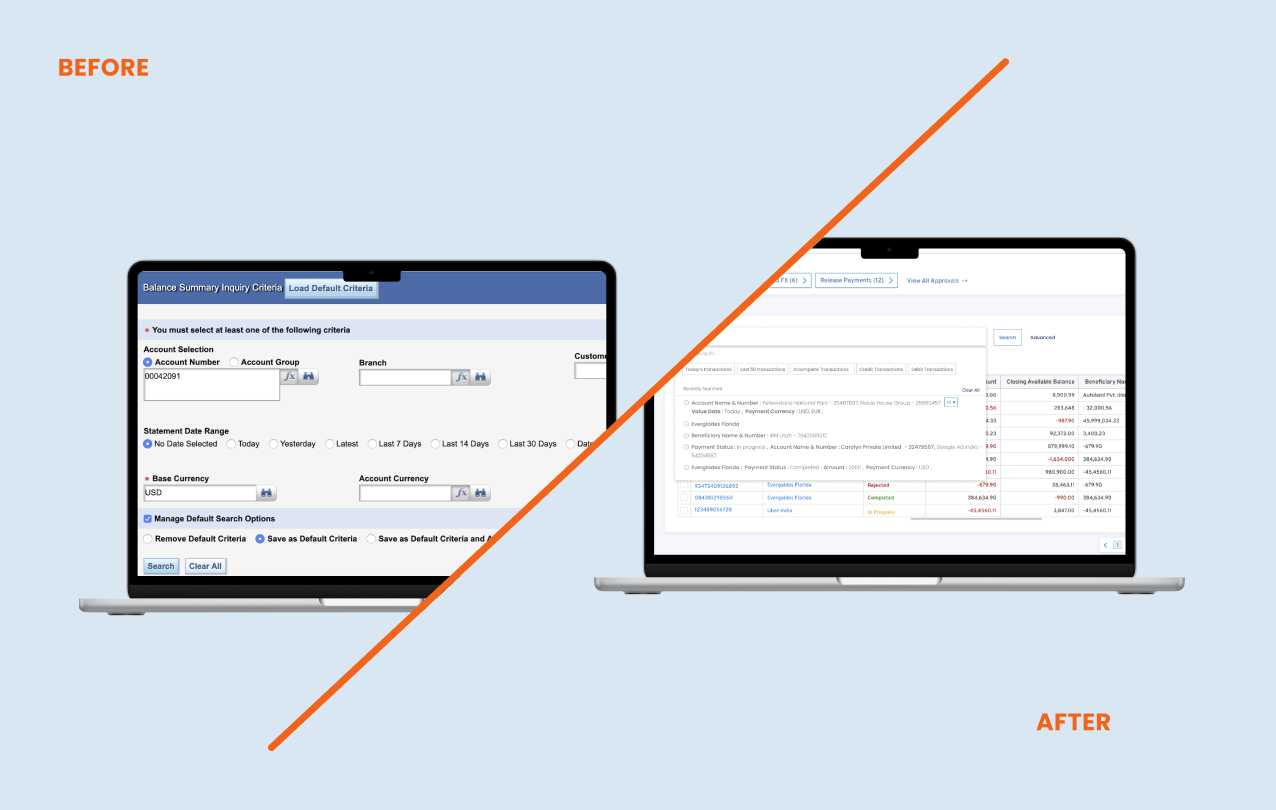
Problem statement
The existing method of finding relevant information across the product was complex and not user-friendly.
Too many options and difficult navigation led to confusion and frustration — driving an increase in calls to customer service representatives.
The challenge
- Stakeholder buy-in: convincing multiple stakeholders that so much negative feedback stemmed from users not finding relevant data
- User bias: users accustomed to the existing behaviour
- Collaborating with regional teams: as this change would roll out on a global scale
Solution outcome
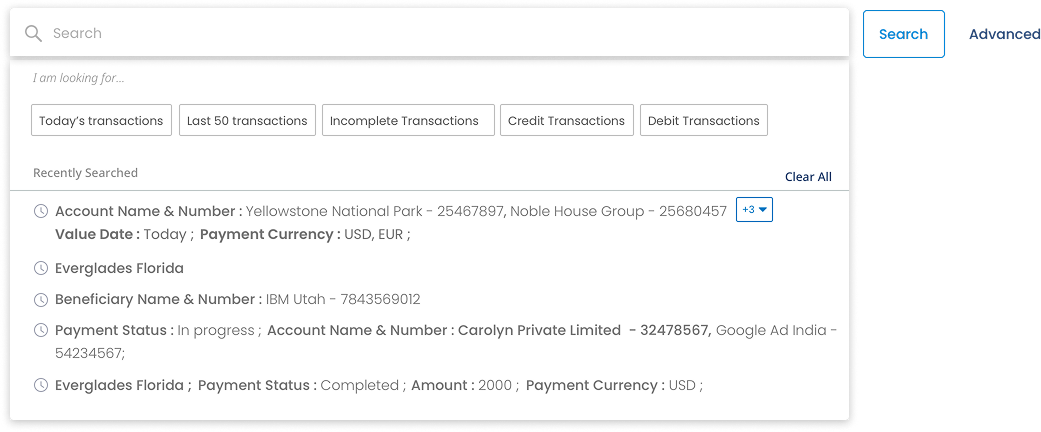
Why not reuse existing search
A fintech B2B platform requires a solution tailored to its specific needs — searching for financial transactions calls for dedicated features around transaction history, entitlement-based search for data security, and integration with existing tools that off-the-shelf solutions can't achieve.
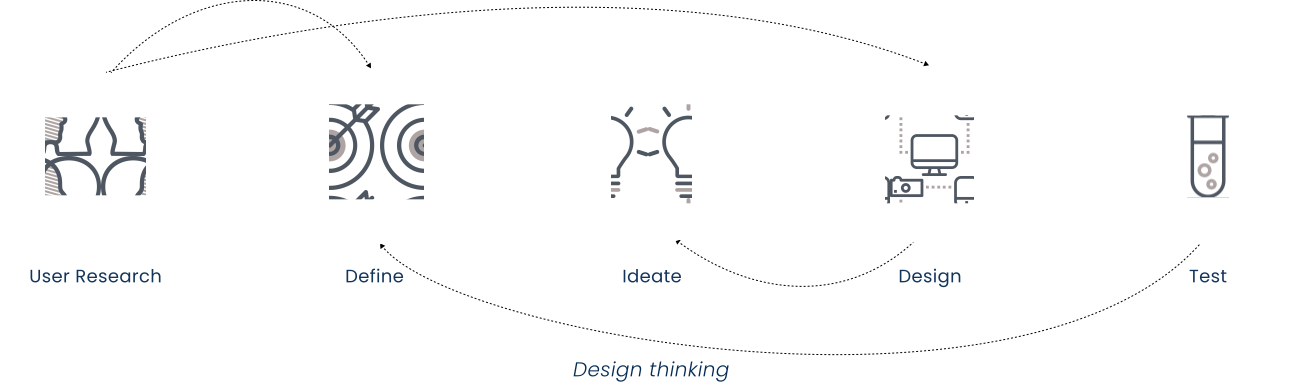
Design process & user research
A design-thinking process from research through to test.
Major pain points
No string search: All users wanted to search by a string in combination with other fields.
Cannot reuse a query: Users needed to reuse the same search multiple times a day or week.
Only one way to search: Users wanted a combination of advanced and quick filters suited to their behaviour.
Define
User personas
Two personas represented the core users of the search experience.
Sarah Pinoto
Daniel Lewis
Brainstorming
We explored various options for how to approach this solution, narrowed down to one direction, and explored it further through brainstorming and selected-solution ideation with the wider UX community.
Final designs after testing
After all the brainstorming we finalized on one concept and developed it further with all the connected user journeys and a clickable prototype.
Usability testing
After narrowing down to 1 concept we conducted usability testing with 10 users and based on the result made all the required changes.
Documentation & handoff
To keep collaboration seamless, we shared behaviour documents, scenario-specific specification documents, and usage documentation with both the dev and UX teams to ensure consistency across the product.
Rollout & next steps
To make the pattern more user-centric long term, we proposed rolling it out in multiple phases — so the same search pattern could be reused across products and eventually become a global, product-level search.
Less is more. Allow users to see information on a need basis.